


Daily Grooming Routines
To maintain a mustache, you must establish daily habits that keep your facial hair healthy and well-shaped. Every morning, start by washing your mustache with warm water to remove any residue from the previous night and prepare the hair for styling.
After washing, use a fine mustache comb to detangle and organize the hair growth, working from the center outwards towards the outer corners. This helps train the hair to grow in the direction you want and find any areas that need trimming or attention.
Apply the right products for your chosen style. A light style like the chevron may only need a small amount of beard oil for conditioning, a more elaborate style like the handlebar needs mustache wax applied to slightly damp hair for maximum hold and shaping. For styling products that match different hair types and finishes, the best mustache wax and fits naturally here.
Finish up by checking for any stray hairs that are beyond your style and trim them with sharp scissors. This attention to detail will keep your mustache from looking shaggy and maintain the clean lines of most styles.
Weekly Deep Maintenance
Once or twice a week, take some extra time to do a deeper mustache care that goes beyond daily touch ups. This deeper maintenance should include washing with a beard shampoo that removes product buildup while conditioning the hair.
Use this time to assess your mustache’s shape and make any necessary adjustments to keep it symmetrical and in proportion. Longer styles may need trimming to prevent certain areas from growing faster than others, which can throw off the whole style.
Apply conditioning treatments like beard oil or balm to nourish both the hair and skin underneath. This prevents dryness and itchiness, and promotes healthy growth that supports your style.
Check your tools during weekly sessions, make sure scissors are sharp, and combs are clean. Dull tools can damage hair and make trimming difficult, and dirty tools can harbor bacteria that cause skin irritation. If you haven’t chosen a look yet, the mustache styles guide is the best place to start.
Mustache Styling Products and Tools Size
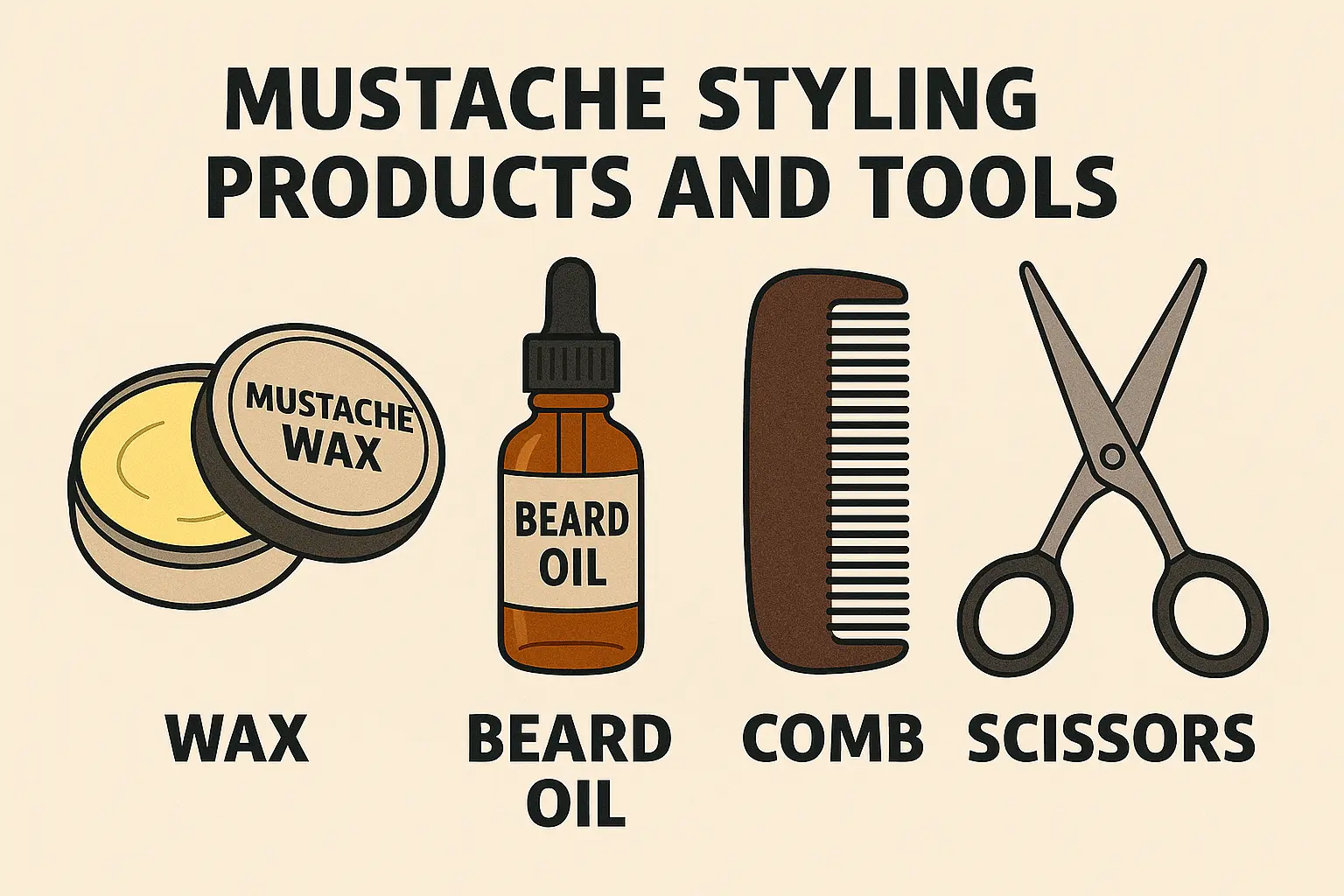
Mustache Wax Categories
Understanding the different mustache wax formulas will help you choose the right one for your style needs. Light hold waxes are great for natural styles like the chevron or walrus, providing just enough control and conditioning to keep the hairs in line without looking styled.
Medium hold waxes are good for styles that need moderate shaping, like the lampshade or painter’s brush, providing enough control for geometric shapes but still workable throughout the day. These formulas balance hold with a natural look.
Strong-hold waxes are necessary for elaborate styles like the full handlebar mustache or dalí mustache, where extreme shaping and all-day hold are crucial. These will feel stiffer but provide the control for dramatic curves and long shapes.
Special waxes include heat-activated formulas that become more pliable when warmed, making application easier and providing a strong final hold. Some products combine wax with conditioning agents, styling, and hair health.
Essential Tools and Equipment
Good tools make the difference between professional-looking and amateur-looking. Sharp trimming scissors designed for facial hair will give you the precision to maintain clean lines and remove individual stray hairs without affecting surrounding growth.
A fine-toothed mustache comb serves multiple purposes: detangling hair, training growth direction, and helping to distribute styling products evenly. Boar bristle brushes are great for longer styles, helping to distribute natural oils and train the hair into place.
Electric trimmers with adjustable guards are great for maintaining styles that require uniform length, like the beardstache or stubble parts of hybrid styles. Look for models with precise length settings and sharp blades that cut clean without pulling.
Special tools like mustache guards for drinking and eating, small styling brushes for product application, and even heated styling tools for stubborn hair can make your grooming routine more effective and convenient.
Beard Oils and Conditioning Products
Beyond styling, beard health needs consistent conditioning to prevent dryness, brittleness, and skin irritation. Good beard oils have carrier oils like jojoba or argan that mimic natural skin oils, so they moisturise without greasiness.
Beard balms offer similar conditioning benefits with added styling, with natural waxes that provide light hold while nourishing hair and skin. These are great for men who want conditioning benefits without the strong hold of traditional mustache wax.
Look for products with natural ingredients that support hair health and avoid harsh chemicals that can cause irritation or dryness. Essential oils not only smell nice but also often have extra benefits like antimicrobial properties or growth stimulation.
Application timing matters – oils work best on clean, slightly damp hair, while balms and waxes work best on completely dry hair for maximum hold and distribution. Knowing these subtleties will help you get the most out of your products.
Common Mustache Problems and How to Fix Them
Common Grooming Mistakes
Many men make mistakes that ruin their mustache’s look and health. Over-trimming is probably the most common mistake, where too much cutting can affect the fullness of the style and take months to fix.
Not taking care of the skin underneath the mustache leads to irritation, acne, and unhealthy hair growth. Cleaning and moisturizing this often forgotten area prevents problems that will force you to abandon your chosen style.
Using styling products incorrectly, either by using too little for not enough hold or too much for unnatural stiffness, is another common mistake. Finding the right product amount takes experimentation, but it makes a big difference in your style.
Ignoring professional maintenance when needed will result in uneven growth and poor shaping that’s hard to correct at home. Scheduling occasional professional trims will keep your mustache in shape and proportion.
Managing Patchy Growth and Uneven Patterns
Many men are frustrated with uneven facial hair growth, but strategic styling can minimize the problem until your hair grows in more evenly. Fuller styles like the walrus mustache or beardstache hide sparse areas by providing overall coverage that draws the eye away from thin spots.
Patience solves patchy growth problems as hair follicles grow at different rates, and areas that appear sparse at first may fill in with more growing time. Don’t give up on your style too quickly; give your hair at least 3-4 months to reach its full potential.
Growth-promoting products with biotin or specialized peptides can help with hair density and growth rate, but results vary greatly from person to person. Proper nutrition and sleep also support healthy hair growth.
If patchy areas persist, consider modifying your style rather than giving up on it altogether. For example, a standard handlebar can be modified to a petite handlebar that requires less coverage in problem areas while keeping the essence of the style.
Controlling Flyaway Hairs and Maintaining Shape
Stray hairs that won’t stay in place can ruin even the best mustache stylesall-day. Regular application of the right products helps control those rogue hairs, but the technique is just as important as the product.
When applying wax or balm, work the product between your fingers to warm and soften it before applying. This ensures even distribution and all-day hold. Focus extra on problem areas where hair tends to stick out or curl.
Training stubborn hairs takes consistency and patience. Daily combing in the direction you want and the right products will gradually train the hair to stay in place. Some hairs may need individual attention with a small amount of strong-hold wax.
Environmental factors like humidity and wind can affect your mustache shape throughout the day. Carrying a small comb and touch-up wax allows for quick fixes when needed to keep your style in check.
Eating and Drinking Challenges
Practical daily activities present unique challenges for mustache wearers, especially those with fuller styles that go over the lip line. Developing techniques for eating and drinking without compromising your style or creating embarrassing situations takes some practice.
For drinking, consider using straws when possible or tilting glasses and cups to avoid direct contact with longer mustache hairs. Some men invest in mustache guards or cups designed for facial hair, but these aren’t necessary for most occasions.
Eating requires more attention, especially with messy foods or soups. Take smaller bites and be mindful of sauce-heavy dishes. Keep napkins handy and don’t be afraid to excuse yourself for quick touch-ups when needed.
Long-term mustache wearers develop personal techniques that work for their style and eating habits. These become second nature with practice, and the challenges become less noticeable over time.
Professional Appearance and Workplace Considerations
Many professional environments have evolved to accept well-groomed mustache styles, but understanding your workplace culture is important. Conservative industries may favor more moderate styles like the chevron or pencil mustache over the more elaborate horseshoe or dalí.
The key to professional acceptance is impeccable grooming, not style. A well-maintained symmetrical mustache in any style is better than a carelessly groomed conventional look. Invest time in daily maintenance and regular professional trimming. Some workplaces have facial hair polices, especially in food service, healthcare, or safety-sensitive industries. Check your employer’s dress code and consider how your chosen style fits into those requirements before you start growing and styling.
If in doubt, start with a more conservative style and gradually move to bolder choices as you test the waters and gauge workplace acceptance. This way you can test the boundaries while maintaining professional credibility and avoiding conflicts.
Professional vs. At-Home Care
While daily maintenance can be done at home with the right tools and techniques, professional barbering provides precision and expertise that’s hard to replicate at home. Professional services can create sharp lines and can give you valuable advice on products and techniques.
Get professional help when you first start your chosen style, as experienced barbers can shape your mustache correctly from the beginning and teach you proper maintenance techniques. They can also identify potential problems with your chosen style based on your hair growth patterns. If you want a cleaner daily routine overall, declutter your digital life supports the same habit-building mindset.
At-home maintenance becomes more manageable as you gain experience and confidence with your tools. Investing in good scissors, combs, and styling products will make daily care between professional appointments more effective.
The ideal approach is to get professional shaping every 4-6 weeks and consistent at-home daily maintenance. This balance will keep your mustache well-shaped and make professional services more affordable and practical.


